Shopping note: This journal carries advertisements and may earn a commission from qualifying purchases through marked commercial links. Product availability, prices and returns depend on your retailer and region. Read our disclosure.
A sofa throw can add color and make an evening more comfortable, but it is also an object you repeatedly unfold, move, wash, and put away. Choosing only by a styled photograph can leave you with a blanket too small to use or too bulky for the available storage. Begin with the way you want to enjoy it.
Decide whether the throw is mainly decorative, personal coverage, or something several people will share. Those roles can overlap, but one usually matters most. Measure the sofa and compare product dimensions with the amount of coverage you want. A model draped over one arm may look generous while being much smaller than your intended use requires.
Test scale before buying
Use an existing blanket or sheet to estimate the proposed dimensions. Sit with it as you normally would and notice whether it covers the areas you want without excess fabric on the floor. A larger throw can be pleasant but may be awkward to handle or clean. Choose according to comfort and space, not the largest option offered.
Think about the sofa's everyday use. A throw placed across a seat may move each time someone sits down. A carefully arranged fold may be simple to restore or may irritate you repeatedly. The best styling is one the household can live with, rather than a display that requires supervision.
Feel the texture in context
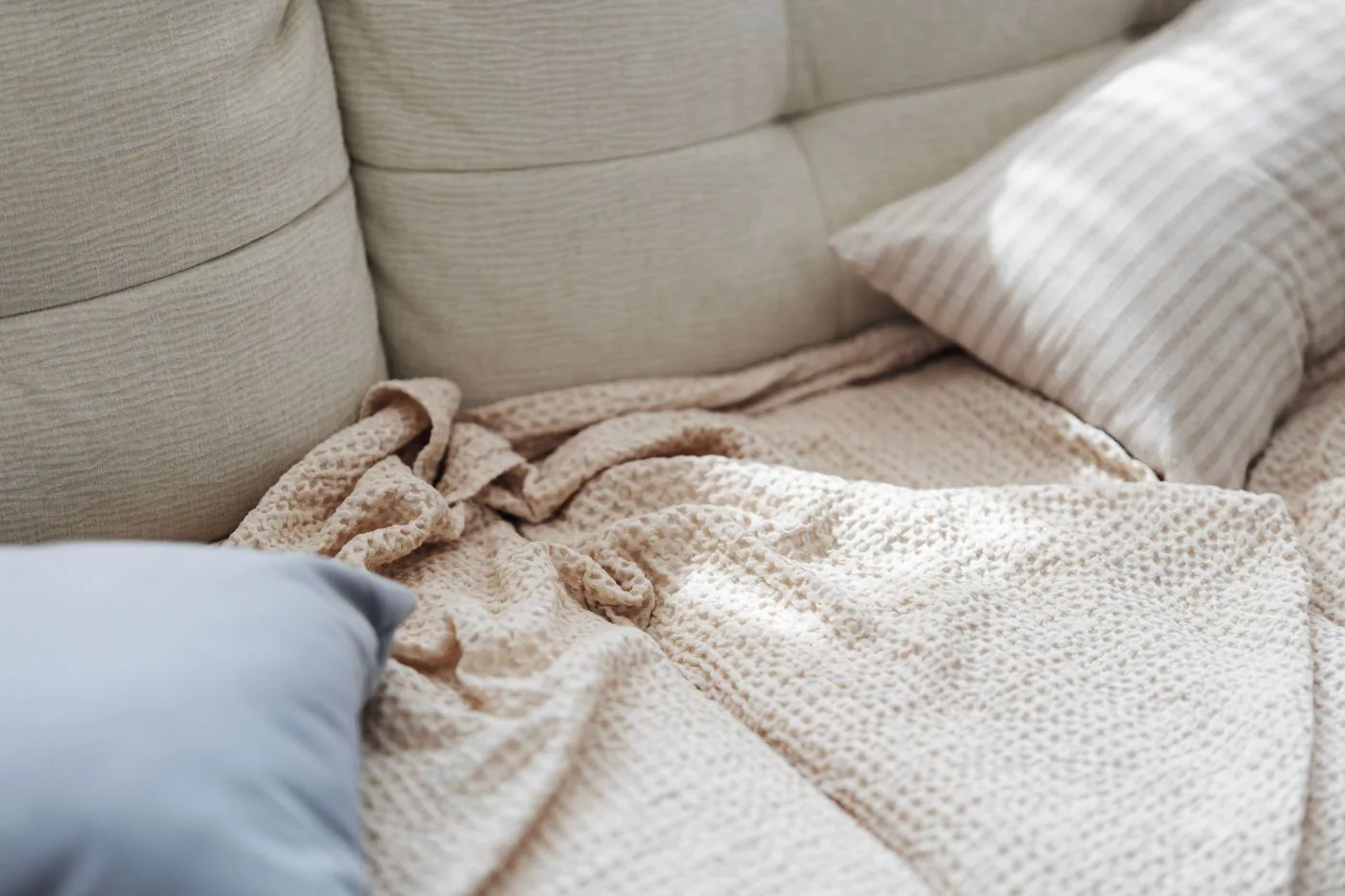
Handle the material when possible and read the full composition. Consider whether it feels comfortable against skin and the clothes you wear at home. Fiber names do not predict every aspect of softness, weight, or construction. A highly textured throw may be enjoyable visually yet less pleasant for your particular use.
Check edges, seams, tassels, and any decoration. Consider whether they will catch on the sofa, clothing, or ordinary household activity. In homes with children or animals, choose and use items appropriately for those circumstances. Do not assume decorative details are harmless simply because they appear in a lifestyle photograph.
Read the complete care routine
Check washing, drying, and other instructions before purchase. Compare them with your equipment and willingness to maintain the item. A bulky throw may fit on the sofa but not suit the laundering arrangement you have. Special care can be worthwhile if you accept it, but it should be a known part of the choice.
Think about frequency. A frequently used family throw has a different care burden from a decorative piece brought out occasionally. Avoid buying a delicate everyday item on the assumption that it will stay pristine. Choose something whose intended use and care fit the role you have identified.
Choose color with the room you have
Look at the sofa, rug, and nearby textiles together. A related tone can create a quiet connection; a contrast can make the throw a focal point. Try to judge color in appropriate light and recognize that screens can change its appearance. If buying online, check current return conditions before deciding to compare at home.
One new throw does not require matching cushions, curtains, and artwork. Start with the single addition and see how it feels through ordinary use. If the room still needs another change, identify that separately. A pleasant small purchase can become less satisfying when it triggers a chain of unnecessary replacements.
Give it a resting place
Choose where the throw goes when not in use. A clean suitable basket, shelf, or simple fold on the sofa can work. Make sure the arrangement allows appropriate drying if needed and does not create a trip hazard. A basket that is too narrow may encourage stuffing and make the throw difficult to retrieve.
If several throws are present, identify which are regularly used and which have a specific occasional role. Remove damaged or unsuitable pieces through an appropriate route. A small useful collection is easier to maintain than a pile kept because every color once matched a different idea for the room.
Should the throw cover the whole sofa? Only if that is the job you want it to do and the product suits that use. Is heavier better? Weight affects feel and handling; it is not a universal quality measure. Can a throw replace a sofa cover? Check the intended function and limitations rather than assuming equivalent protection.
Our reading-corner guide can help create a comfortable place to use the throw. The laundry routine connects the purchase with everyday care. A useful throw feels good when unfolded and has an easy home when the evening is over.
Have a correction or a question? Contact the journal. See how we choose topics and approach shopping advice.