Shopping note: This journal carries advertisements and may earn a commission from qualifying purchases through marked commercial links. Product availability, prices and returns depend on your retailer and region. Read our disclosure.
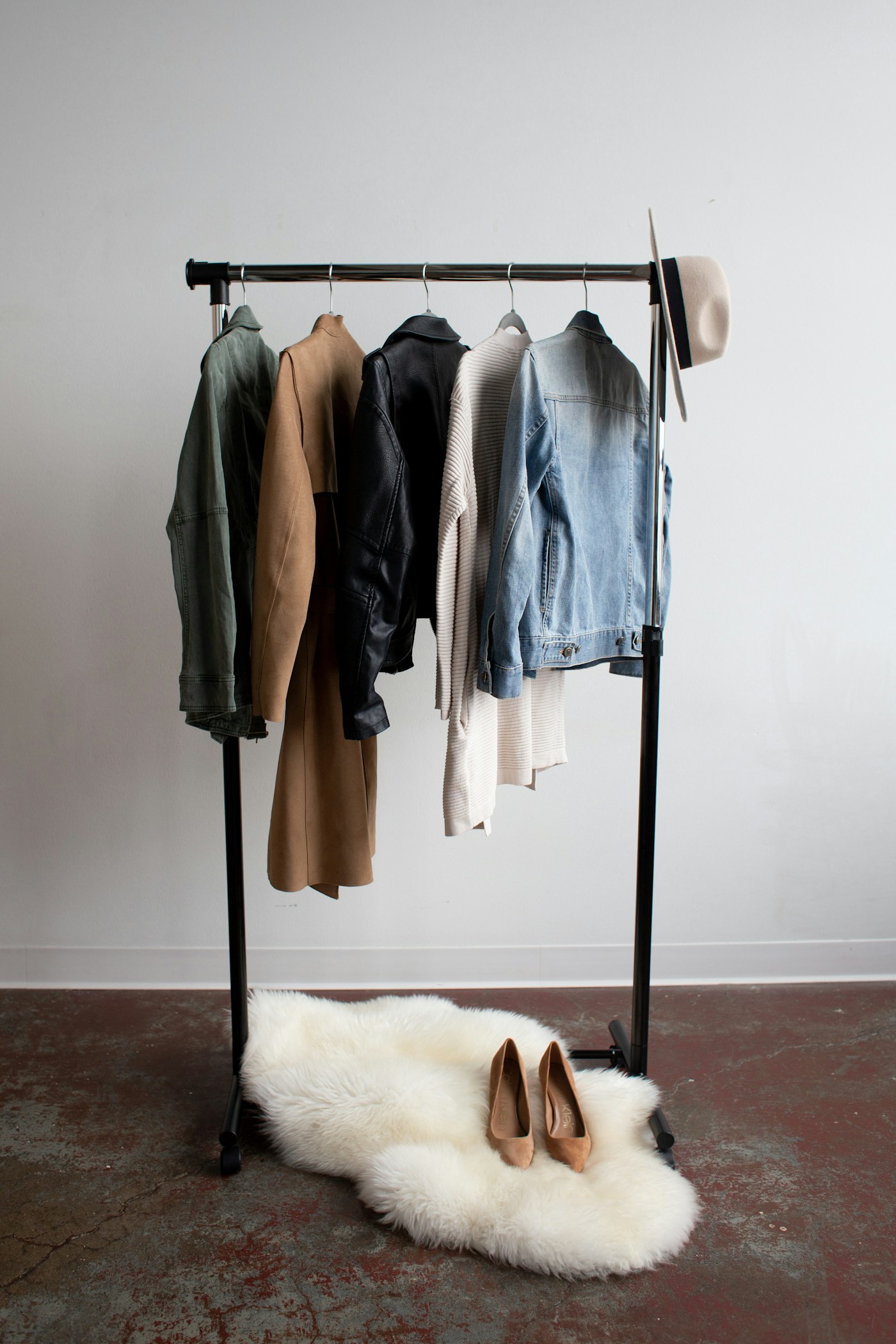
A wardrobe rail can hold many hangers while leaving the clothes compressed against the shelf or floor. Check the complete clearance before adding more garments or storage accessories. The useful arrangement lets clothing rest appropriately and be retrieved comfortably, rather than treating every spare inch as available hanging capacity.
Select the current hanging garments
Read the clothes' care and storage requirements. Some pieces may need a different appropriate arrangement from hanging. Do not assume a rail is the best home for everything that can fit onto a hanger.
Separate frequently used garments from occasional pieces and items awaiting care or repair. The current rail should make ready clothing easy to identify. A crowded group of unresolved items can hide the outfit you actually want.
Measure the usable height
Check the distance from the rail to the relevant surface below, including drawers, boxes, shoes, or another rail. Compare it with the complete hanging garment and hanger. A coat's label size does not establish its actual storage length.
Follow the wardrobe's installation and load guidance. Do not add another rail or attach a hanger system without confirming suitability. An accessory that increases the advertised count may reduce clearance for the clothes you own.
Check side-to-side retrieval
Leave enough space to remove a garment without pulling several others along. The required room depends on hanger shape and garment construction. A thick jacket and a thin shirt can create different practical loads.
Try the ordinary selection process with the door open as it normally is. Hinges or nearby furniture may affect access. If retrieval is awkward, reduce or reorganize the group before assuming a larger wardrobe is necessary.
Keep the lower area purposeful
Choose suitable storage beneath the rail only when it does not press against hems or obstruct retrieval. Keep shoes and unrelated contents on their appropriate care routes. A box should not make clothing hang in an unsuitable position merely because it coordinates with the room.
Check the environment according to the stored materials' requirements. Avoid trapping damp or uncertain clothing in a tightly packed group. Complete appropriate care before returning garments to ready storage.
Review through real use
Use the arrangement during an ordinary week and notice what still gets caught or forgotten. Make a small specific adjustment. The rail does not need to display every garment to be useful.
If a purchase is needed, define the actual clearance or support problem first. Compare exact dimensions, intended load, installation, and care. Another set of hangers cannot compensate for a layout that does not suit the clothes.
Does more hanging capacity mean better storage? Check clearance and retrieval. Can all knits hang? Follow their requirements. Should boxes fill the floor space? Preserve suitable room for the garments above.
Our bag-storage guide gives accessories their own place. The laundry routine keeps the rail stocked with ready clothing.
Have a correction or a question? Contact the journal. See how we choose topics and approach shopping advice.