Shopping note: This journal carries advertisements and may earn a commission from qualifying purchases through marked commercial links. Product availability, prices and returns depend on your retailer and region. Read our disclosure.
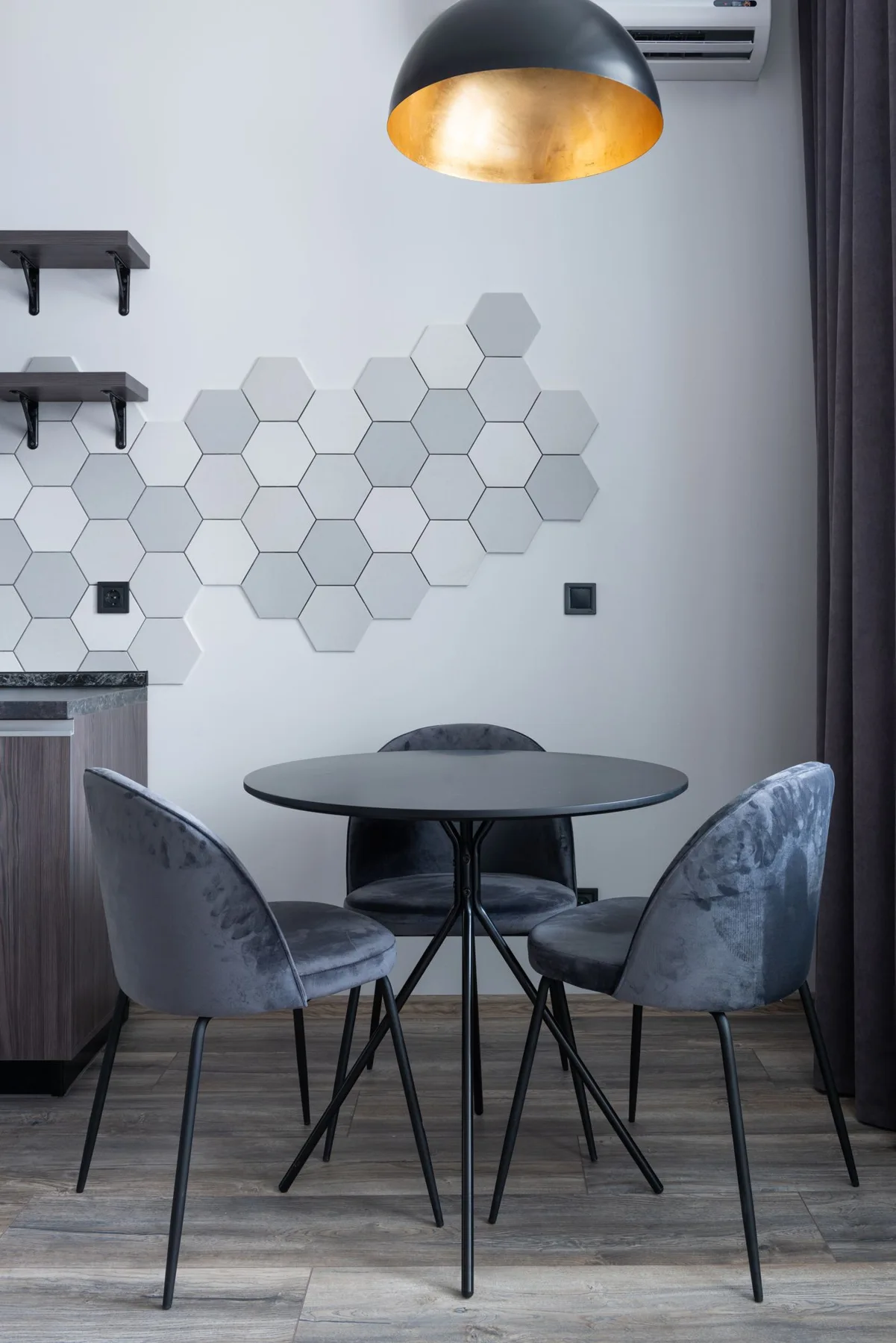
A dining table can fit the room while its chairs become difficult to use. Measure the space people need to pull out a chair, sit, and move past the table. The useful layout works during an ordinary occupied meal, rather than only when every chair is pushed neatly beneath the top.
Observe the current meal
Notice how household members approach their seats and whether someone has to move another object first. Consider individual access needs and any appropriate guidance relevant to the room. Your own comfortable route may not suit everyone.
Keep doors, exits, and essential access clear. Do not treat the gap remaining after furniture is placed as automatically suitable circulation space. The room's ordinary functions should guide the layout.
Measure the complete furniture
Record table, chair, and relevant room dimensions, including arms, legs, supports, and any radiator or other fixed feature. A chair's seat width alone does not establish its working footprint. The movement of pulling it out matters too.
Follow the furniture's intended use, installation, and load instructions. Avoid improvising unstable positions to make a layout look compact. A smaller suitable arrangement can be preferable to a larger set that repeatedly obstructs the room.
Test occupied positions
Use the actual chairs appropriately and see how the table works with people seated. Check the position needed for comfortable sitting and standing. Do not rely solely on a drawn rectangle representing the chair tucked away.
Include the route to serving space or another necessary part of the room. If people repeatedly squeeze past one seat, investigate that specific relationship. Moving one suitable object may solve more than replacing the whole dining set.
Keep decorative additions proportionate
A rug, sideboard, plant, or occasional chair can change the usable space. Read the relevant product and flooring guidance and consider safe stable movement. Attractive additions should not undermine the table's main function.
If a rug is used, assess the actual chair movement and suitable placement rather than choosing only from a styled image. A visual border does not establish practical compatibility with the room.
Compare purchases with the real layout
Before buying another chair or larger table, test measured alternatives using a suitable safe planning method. Include delivery, assembly, care, and current return terms in the complete cost. The purchase should answer a defined use problem.
Review the arrangement after several ordinary meals rather than treating one staged evening as final proof. Small household habits can reveal what the measurements missed.
Can a table fit while chairs do not? Check the full occupied layout. Should every chair stay out daily? Match actual use and suitable storage. Does a smaller chair solve access? Assess the whole route.
Our dinner-table basics considers serving on the table. The balcony-table guide applies similar measurement thinking to another small space.
Have a correction or a question? Contact the journal. See how we choose topics and approach shopping advice.