Shopping note: This journal carries advertisements and may earn a commission from qualifying purchases through marked commercial links. Product availability, prices and returns depend on your retailer and region. Read our disclosure.
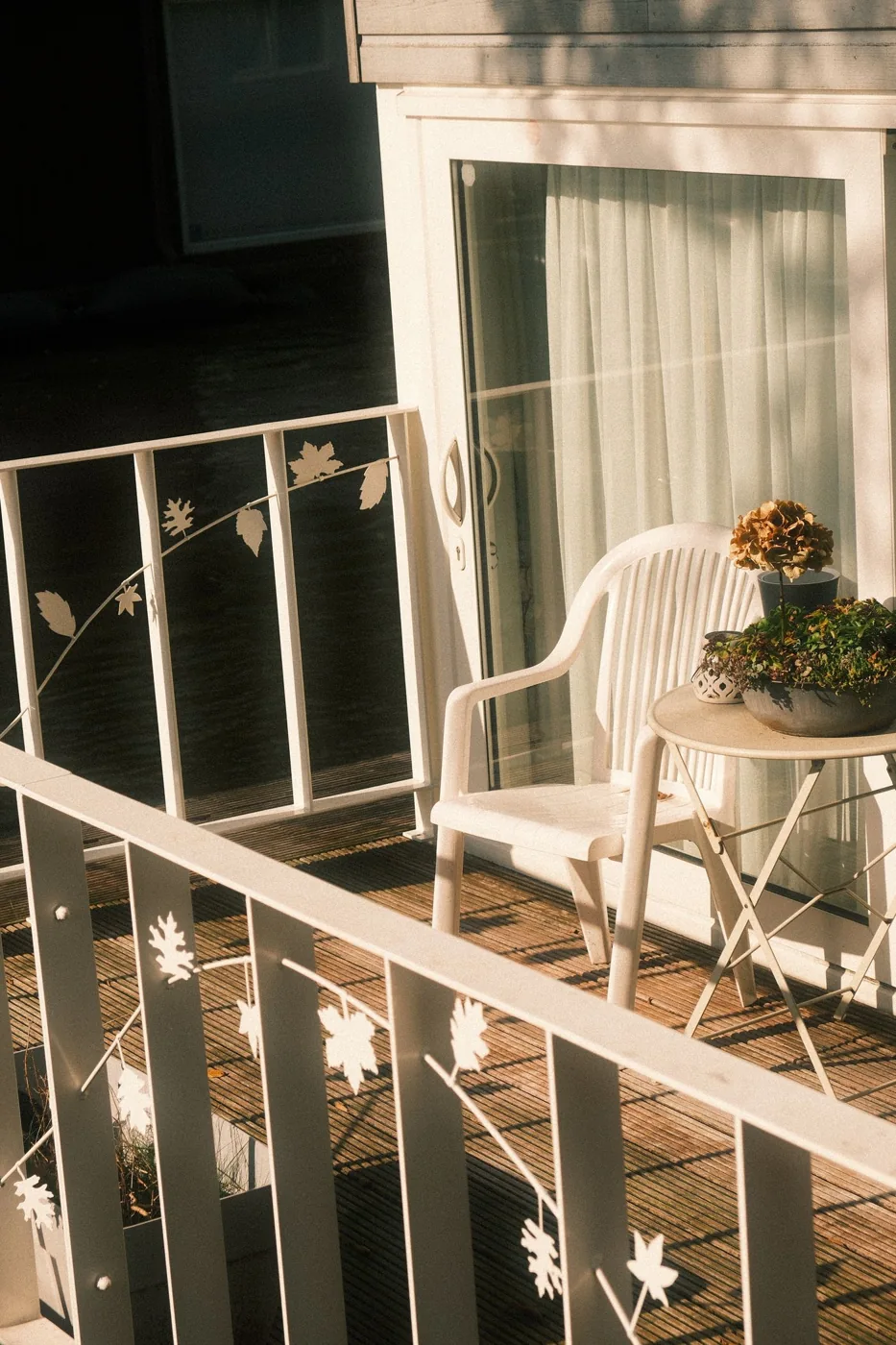
A small balcony table promises morning coffee and a little outdoor calm, but the available floor area may also need to support a door, chair movement, plant care, and safe access. Choosing by tabletop diameter alone can produce a space that looks inviting and feels awkward. Start with how the balcony must work before deciding how it should be styled.
Check building rules, the balcony's intended use, and any relevant safety or load restrictions through appropriate authoritative information. This guide does not assess structural capacity or approve an installation. Use furniture suited to the setting and seek qualified advice where needed. A compact footprint is not a substitute for suitable secure use.
Measure the route, not only the floor
Map the door opening and the route you need to keep clear. Include chair movement and the space occupied while someone is seated. A table that fits against the railing may still obstruct the only comfortable exit. Use a safe temporary outline to estimate the footprint without placing heavy objects or creating a hazard.
Consider how furniture reaches the balcony. A folding design may be easier to move through the door, but check the actual folded dimensions and handling instructions. Do not assume a small assembled table is simple to transport through a narrow entrance. The purchase needs to fit the whole journey into the space.
Define the tabletop's job
Choose whether you want space for one drink, breakfast for two, a book, or another activity. Those jobs suggest different usable surfaces. A decorative edge or central feature can reduce the area available for ordinary objects. Imagine the actual cup, plate, and movement rather than a product photograph with carefully selected tiny accessories.
Keep the purpose modest if the balcony is very small. A table that supports one enjoyable activity may be more useful than a larger model that claims to serve several but crowds the entire space. You can still choose another arrangement for occasional meals without expecting the everyday table to do everything.
Check stability and intended conditions
Read the manufacturer's outdoor-use, placement, and care guidance. Consider wind and exposure in your setting and follow appropriate advice about securing or storing furniture. Do not improvise attachments to railings or building features without verified permission and suitability. A hanging or clamp-on table requires particular attention to compatibility and installation.
Inspect legs, joins, folding mechanisms, and any locks as directed. Choose a design you can operate comfortably and keep clear of pinch points or other hazards. If children or animals use the space, account for that appropriately. The table should support the household's actual use, not only an adult's carefully staged moment.
Choose material through care needs
Read the complete maintenance instructions and storage requirements. Outdoor labeling does not mean an item can be ignored in every weather condition. Finishes, hardware, and construction can affect care. Decide what routine you will realistically maintain and where the table goes when the maker recommends storage.
Think about cleaning after pollen, rain, or ordinary use. Avoid choosing a surface whose care you dislike merely because it matches an indoor room. A pleasant appearance matters, but the table should remain usable without an elaborate preparation every time you want a cup of coffee.
Test the seating relationship
Compare the table height and leg position with the chair you intend to use. Check knee room, reach, and whether you can stand up comfortably. A new table may work with your existing chair or reveal a mismatch; do not automatically assume both must be replaced. Start with the combination and identify the actual issue.
Keep accessories limited. A plant, tray, or lantern may be enjoyable, but leave enough clear working area and follow relevant safety guidance, especially around flames or electrical items. The balcony does not need to become a second storage room for decorative objects. One useful table can be enough.
Is folding furniture always best? Only when its operation, stability, dimensions, and storage suit the space. Can I attach a table to the railing? Verify building permission, structural suitability, and product-specific installation requirements first. What if no table fits safely? Choose another way to enjoy the balcony without forcing furniture into the route.
Our reading-corner guide offers another activity-first approach to a small space. The Sunday reset can help keep the balcony ready for use. A successful table choice preserves access and supports the simple moments you wanted outdoors.
Have a correction or a question? Contact the journal. See how we choose topics and approach shopping advice.