Shopping note: This journal carries advertisements and may earn a commission from qualifying purchases through marked commercial links. Product availability, prices and returns depend on your retailer and region. Read our disclosure.
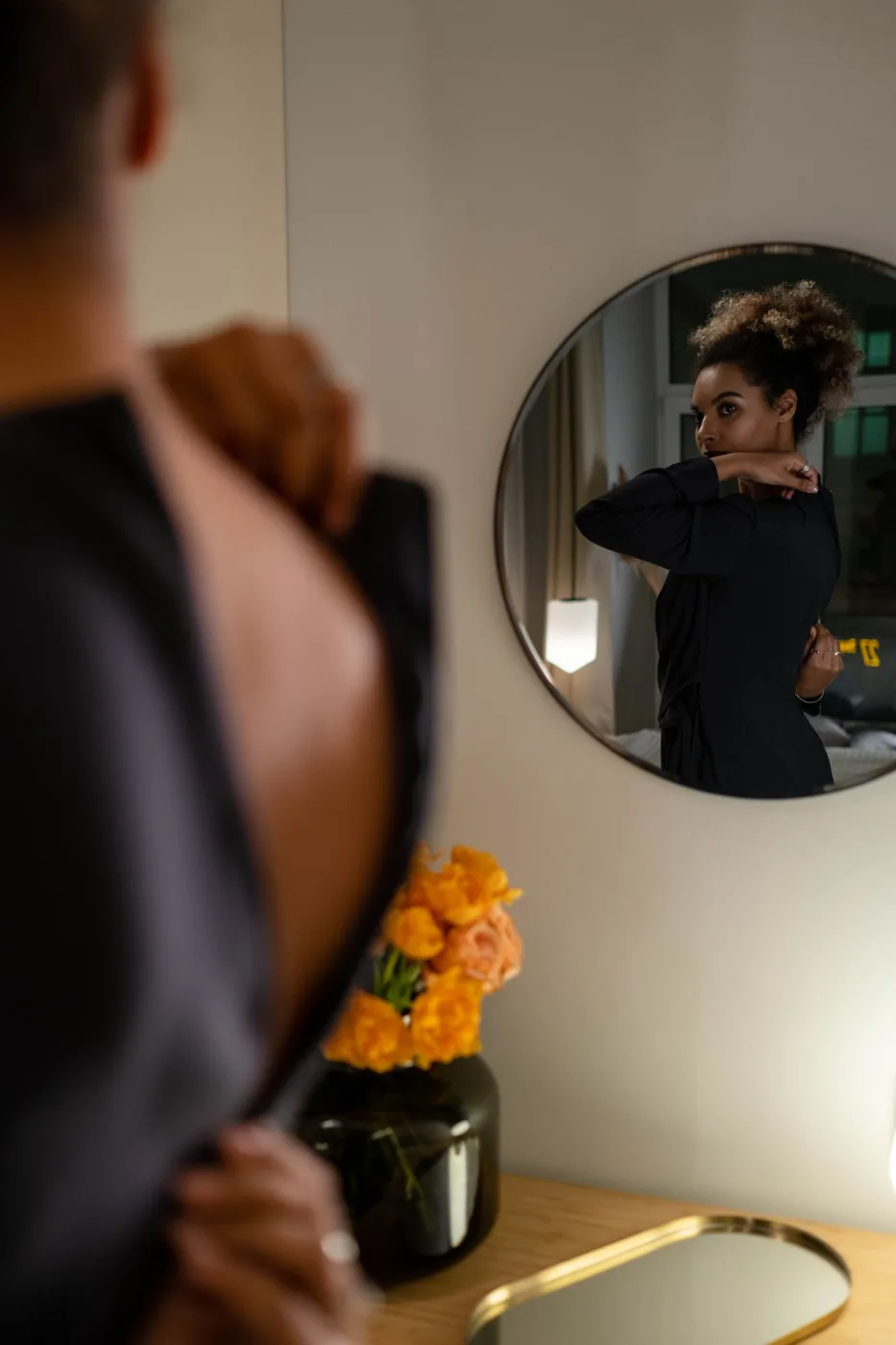
A front-facing mirror gives useful information about a dress, but it does not show the whole garment in use. Side seams, back fastenings and the way fabric settles when seated can change the decision. Check those views before treating a pleasing front photograph as a complete fitting result.
Wear the intended layers
Try the dress with the undergarments and footwear you expect to use. Let it settle naturally rather than pulling every fold into a temporary pose. Stand comfortably and note whether the neckline, shoulders and waist sit as you prefer. Your own comfort and coverage preferences should guide the assessment.
Read the care information while the decision is still open. The dress-care purchase guide helps connect a good fit with a realistic maintenance routine. A dress that suits the mirror but requires care you cannot arrange may need a narrower role or a different choice.
Use the side view for movement
Turn so that you can see the garment's profile without twisting your body unnaturally. Check whether the fabric pulls at the waist, whether the hem settles as intended and whether a seam appears to move away from its expected position. Avoid diagnosing an alteration from a single glance; note the concern and assess it through movement.
Sit on a suitable chair, stand again and reach forward. The side view can reveal a restriction that is less obvious from the front. If the fit is uncomfortable, ask for appropriate fitting advice or choose another size or design rather than assuming the garment will stretch into a better shape with wear.
Check the back without strain
Use a suitable second mirror or ask a trusted person to help you observe the back. Keep the process private and comfortable. Look at the fastening, shoulder position and how the fabric falls. A photograph can serve as a reference if you want one, but it may alter proportions and should not replace how the garment feels.
Add the intended bag and outer layer. The jacket sleeve check helps ensure that a comfortable dress does not become restricted inside the layer it needs. Remove the jacket and see whether the dress remains reasonably settled.
Decide through the complete use
Imagine the actual event or outing, including the journey and seated portions. A dress can fit well and still be unsuitable for a particular activity. Give it a role it can serve instead of expecting one flattering view to override every practical concern.
What if the back looks different from the product photograph? Compare the actual fit and construction, and seek clarification from the seller where needed. The goal is not to reproduce a model's pose. It is a dress that works on your body from the angles and through the movements you will actually experience.
Have a correction or a question? Contact the journal. See how we choose topics and approach shopping advice.