Shopping note: This journal carries advertisements and may earn a commission from qualifying purchases through marked commercial links. Product availability, prices and returns depend on your retailer and region. Read our disclosure.
In this story
1. Check useful internal space2. Assess strap drop with a coat3. Decide how much closure you need4. Consider empty weight5. Inspect the base and seams6. Keep organization proportionate7. Read care and return informationAn everyday tote has to behave well when it is full. The shape in a product photograph tells only part of the story. A bag may look generous yet have an opening too narrow for a lunch container, or feel light when empty and uncomfortable after a laptop is added. Start with the contents of an ordinary day.
Place those items on a table: keys, wallet, phone, water bottle, reading material, work equipment and anything else you genuinely carry. Remove things that live in the bag only because there is space. Measure the largest item and note whether it needs protection from other objects. Then use these seven checks to narrow the options.
1. Check useful internal space
External dimensions do not always describe the space available inside. A tapered base, thick lining or divided interior can limit what fits. Test the actual items when possible, or compare internal measurements carefully. Leave enough room to remove the object you need without unloading everything above it.
For work equipment, check whether a compartment accommodates the device in its protective sleeve. Do not assume the phrase laptop tote guarantees suitable padding or a compatible size. If the bag lacks protection, allow space and weight for a separate sleeve.
2. Assess strap drop with a coat
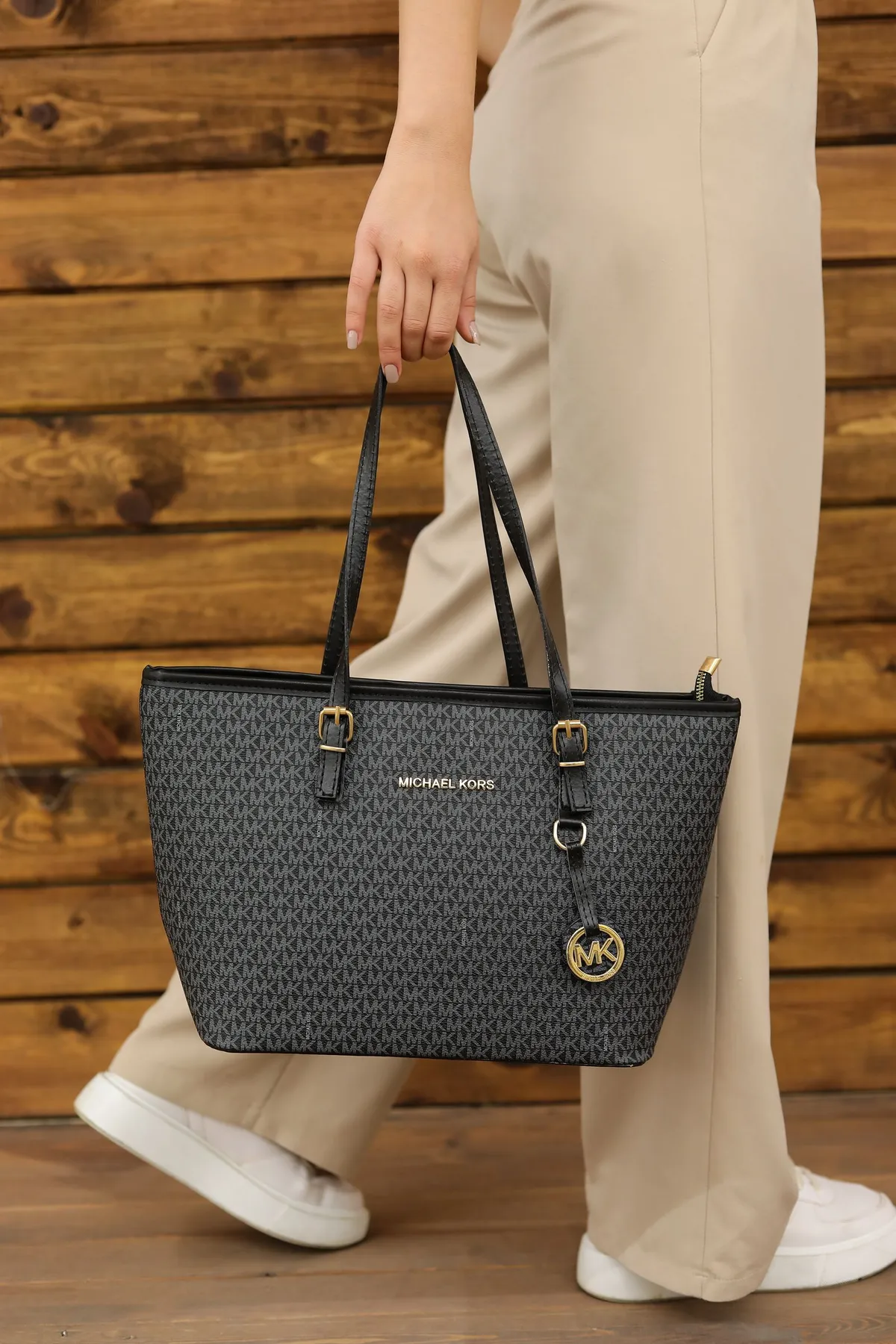
A tote that slips easily over a bare arm may be difficult to shoulder over a jacket. Try the straps with the layers worn during the main season of use. Check whether the bag sits too high under the arm or strikes the hip awkwardly when walking.
Narrow straps can concentrate pressure when the contents are heavy. Wider straps may feel better but can slide, depending on material and shape. Carry the bag for several minutes with a realistic load if the store permits it. There is no universal strap measurement that guarantees comfort.
3. Decide how much closure you need
An open top offers quick access, but it may be unsuitable for crowded transport, rain or a bag that tips over easily. A zip gives fuller coverage, while a magnetic fastening may leave gaps. Examine how the opening works with the largest object inside; an awkward zipper can turn a small convenience into a daily irritation.
If the bag will travel, think about the journey as well as the destination. The weekend carry-on plan explains why accessible essentials matter. A tote used as a personal bag should also be checked against the operator’s particular baggage rules.
4. Consider empty weight
Structure, hardware and thick material all contribute weight before anything is packed. A substantial bag may stand neatly and protect its shape, while a softer one can be lighter and easier to store. Decide which advantage matters more on your route. The right compromise for driving to work may differ from one involving a long walk.
5. Inspect the base and seams
Look closely where straps join the body and where the base meets the sides. Check stitching, loose threads, lining attachment and hardware movement. A reinforced-looking detail is not proof of a particular load capacity, so follow any stated limits rather than overfilling the bag.
Consider where it will be placed during the day. A pale fabric base may need more frequent cleaning, while an unstructured base can sag under heavy objects. Neither is automatically wrong; the choice should fit the way the tote will be used.
6. Keep organization proportionate
One accessible pocket for keys and a secure place for small valuables may be enough. Many tiny compartments can create a new search problem if you forget which holds what. Try a removable pouch before paying for a complicated interior. It can also make changing bags easier.
Think about storage at home, too. The small entryway guide shows how a bag can have an accessible resting place without filling a hallway. Measure a hook or shelf if the tote needs to fit there.
7. Read care and return information
Check the exact material and cleaning instructions. Leather, coated cloth and washable fabric have different care demands, and the right choice depends on the time you want to spend maintaining it. Resale listings deserve clear photographs of corners, handles, lining and closures.
Compare department stores, bag specialists and secondhand options by the same criteria. Keep tags and packaging during any permitted home assessment. Buy when the tote carries the real contents comfortably, closes as needed and fits your routine. Extra capacity is only useful when it does not become extra weight by habit.
Have a correction or a question? Contact the journal. See how we choose topics and approach shopping advice.