Shopping note: This journal carries advertisements and may earn a commission from qualifying purchases through marked commercial links. Product availability, prices and returns depend on your retailer and region. Read our disclosure.
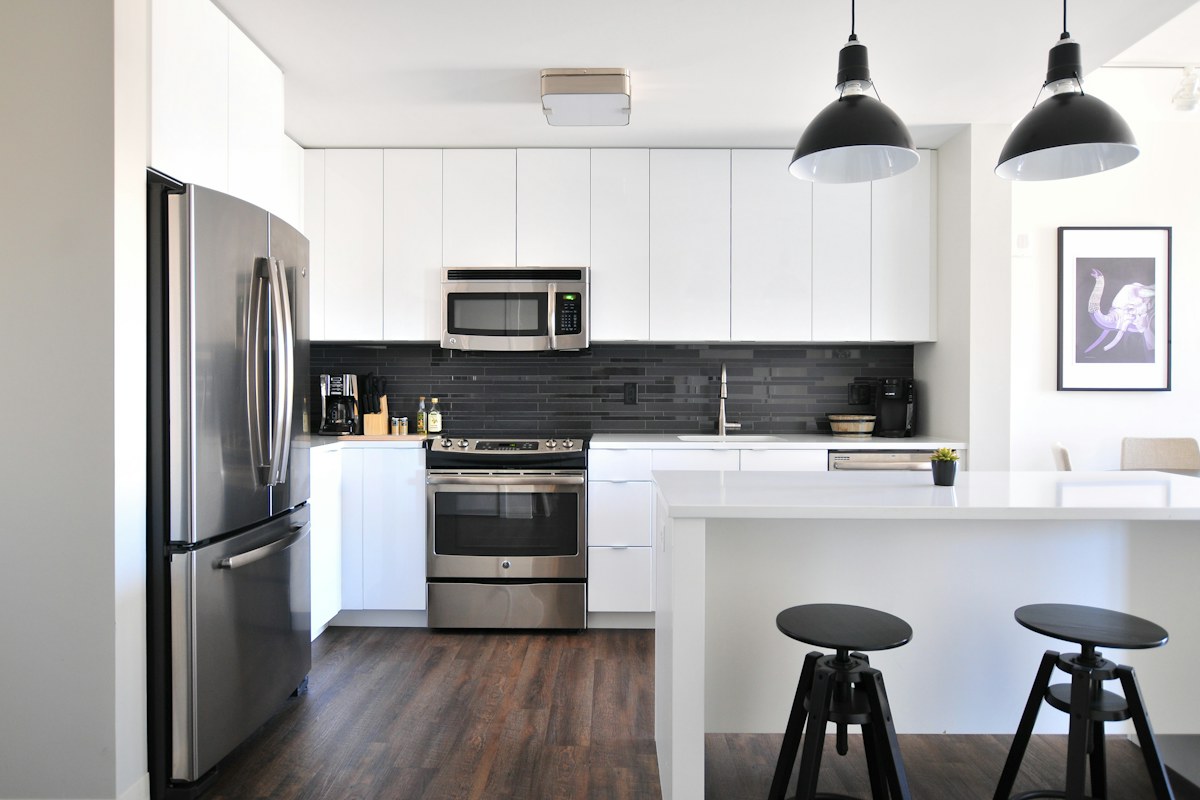
A fridge door needs room to open as well as room to stand closed. A new basket, trolley or bin placed nearby can look useful and quietly make the fridge harder to access. Check the whole opening route before adding storage to the kitchen's spare-looking space.
Observe the current movement
Open the door as the appliance is intended to be used and consult the maker's installation and clearance guidance. Notice the space needed to reach shelves, remove drawers and use any relevant compartments. Do not assume that a door opening a little is enough for every routine task.
Keep the route suitable for the household's actual access and movement needs. A narrow gap that one person can squeeze through may not be appropriate for someone carrying groceries or using mobility equipment. Avoid changing ventilation, installation clearances or fixed fittings to gain storage space; seek appropriate professional guidance where needed.
Mark the proposed storage footprint
Measure the candidate item and consider its complete usable shape, including handles, opening drawers or projecting contents. Use a safe temporary marker if helpful, keeping it clear of walking routes. Compare the space occupied during use, not only the product's closed dimensions.
If a trolley moves, decide where it goes while the fridge is open. A movable object is not automatically convenient if every meal begins by shifting it into the doorway. The small entryway guide offers a useful reminder that shared routes need a defined purpose even when storage seems scarce.
Rehearse an ordinary grocery arrival
Imagine bringing the actual shopping into the kitchen. Where does the bag rest while you open the fridge? Can the appropriate contents move into storage without being carried around the new furniture several times? Follow suitable food-handling guidance and avoid extending the process simply to accommodate an attractive storage unit.
Check the reverse movement too: retrieving ingredients, returning them appropriately and closing the door. A shelf that works for a staged photograph may be awkward when the kitchen is in use. Keep the appliance's normal operation clear rather than treating every visible gap as wasted space.
Choose the smallest useful change
The answer may be relocating a bin, reducing unrelated objects or choosing a shallower storage piece. Start with the specific obstruction instead of buying an entire kitchen system. Keep the surrounding surfaces usable for their ordinary tasks.
The coffee-tray guide shows how a small arrangement can help only when it serves the routine around it. Should the space beside the fridge remain empty? It may need to, if that is what appropriate access and installation require. Clear working space has value even when it holds no container. A successful storage addition makes the kitchen easier to use without borrowing room the fridge already needs.
Have a correction or a question? Contact the journal. See how we choose topics and approach shopping advice.