Shopping note: This journal carries advertisements and may earn a commission from qualifying purchases through marked commercial links. Product availability, prices and returns depend on your retailer and region. Read our disclosure.
A shared travel bathroom can be perfectly usable while offering almost no room for everyone's toiletries. Bottles spread across the basin, a damp pouch occupies the only shelf, and the item you need disappears beneath another person's wash bag. A compact kit that sets up and packs away simply can make the stay more comfortable for everyone.
Begin with the facilities confirmed by the accommodation and the people sharing them. Check what is supplied and what you need for your own routine. Keep medication, specialist products, and any items with particular storage instructions handled accordingly. The aim is organization, not replacing personal care or medical requirements with a generic minimalist list.
Pack the routine you actually use
Walk through an ordinary morning and evening, noting the products and tools you genuinely need for the length of the stay. Avoid packing every alternative from the cabinet. A short trip may not need the same quantities as a long one, but do not decant or change packaging where the product's instructions or your needs make that unsuitable.
Check current transport rules directly with the relevant official guidance and carrier when they affect your kit. This article does not state a universal liquid allowance. Choose containers and quantities that comply with the actual journey, and keep required information with products where appropriate.
Choose a kit shape for limited surfaces
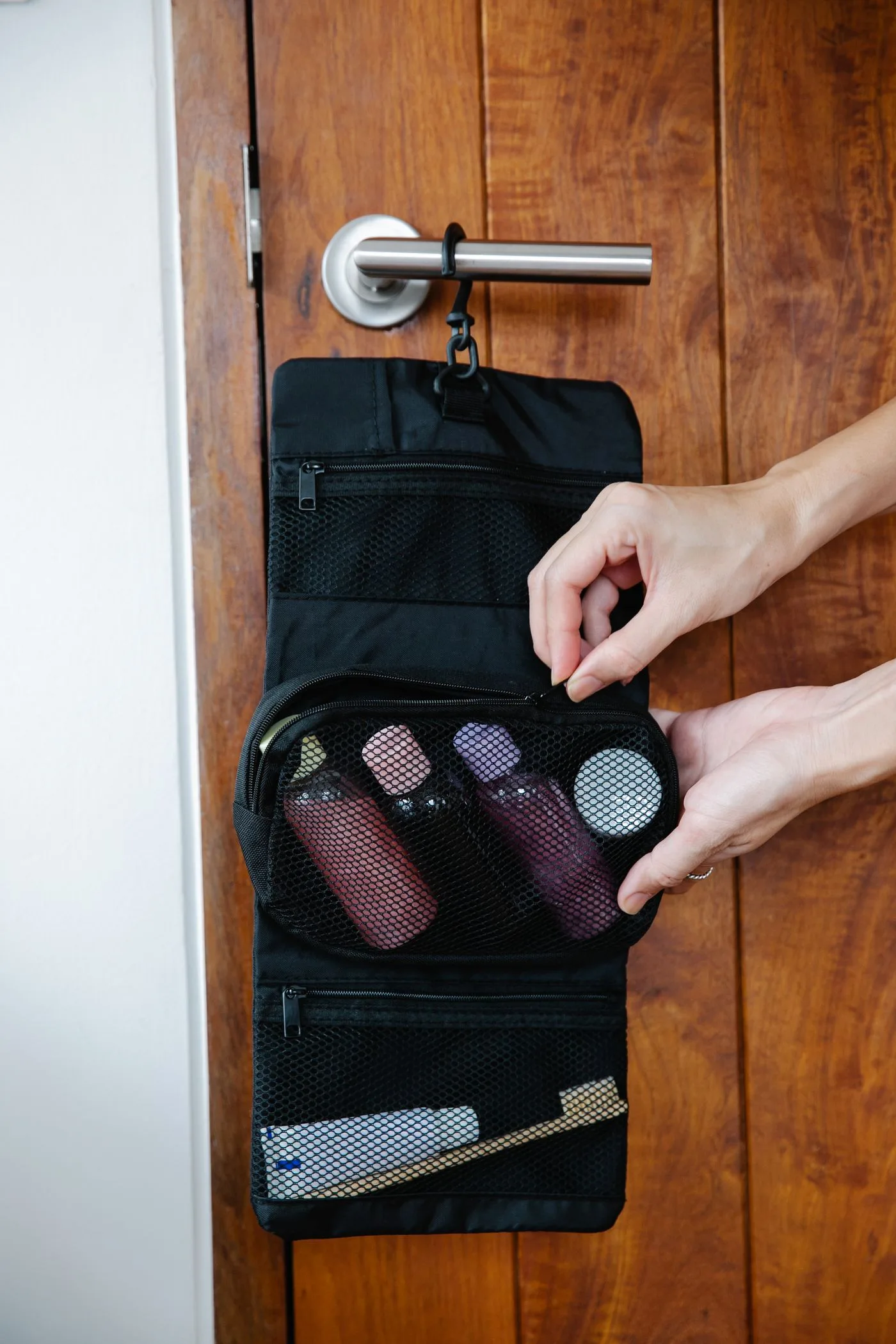
A compact pouch can work if it opens clearly and closes without forcing the contents. A hanging design can be useful only where there is a suitable permitted point and the load can be supported appropriately. Do not hang it from a fixture not intended for that purpose or place it where it interferes with safe bathroom use.
Measure the largest essential item before buying a new bag. Product photographs can make capacity difficult to judge. Test the loaded kit and check whether you can retrieve the daily items without unloading everything. An organizer with many compartments can help some routines and slow others down.
Separate dry and damp items
Give toothbrushes, cloths, and other items appropriate handling and drying according to their care and hygiene guidance. Do not seal damp objects among paper packaging or items that need to remain dry. If a separate container is useful, choose it for the actual purpose and clean it as directed.
Check bottle closures and the condition of containers before departure. Keep leakage risk in mind even when a pouch is described as water-resistant. A suitable secondary arrangement may protect other luggage, but it is not permission to ignore a faulty lid. Pack the kit where you can inspect and remove it easily.
Agree on a small shared-space routine
Ask where each person's kit will go between uses. A shared shelf may need a simple division, while a tiny room may work best when everyone takes their kit back afterward. Do not assume your own routine deserves every available surface. Clear communication can prevent small repeated irritations.
Keep the basin and other shared working areas accessible. After use, return products to the kit and deal with damp items appropriately. Remove hair, packaging, or other residue through the relevant cleaning or disposal route. The routine should leave the bathroom understandable for the next person rather than requiring them to move your belongings.
Make the departure check specific
Before packing for home, check the places you actually used: shelf, shower area, hanging point, and any dry storage outside the room. Inspect for dampness or leaks and handle items according to their instructions. Do not put the kit straight into clean clothing because its exterior looks dry from one side.
At home, unpack promptly and clean or dry the containers and pouch as needed. Replace consumed essentials and remove products you did not use and do not need for the next trip. A ready kit can be helpful, but review dates and product condition rather than leaving it untouched indefinitely.
Do I need a hanging wash bag? Only if the accommodation and your routine provide a suitable place to use it. Should I share products? Agree that with the other person and respect individual needs and hygiene. Can I keep the kit permanently packed? Review storage instructions, dates, and condition regularly if you do.
Our personal-item packing guide helps with items needed during the journey. The weekend carry-on plan connects the kit to the rest of your luggage. A useful shared-bathroom setup is compact, clear, and easy to remove when someone else needs the space.
Have a correction or a question? Contact the journal. See how we choose topics and approach shopping advice.