Shopping note: This journal carries advertisements and may earn a commission from qualifying purchases through marked commercial links. Product availability, prices and returns depend on your retailer and region. Read our disclosure.
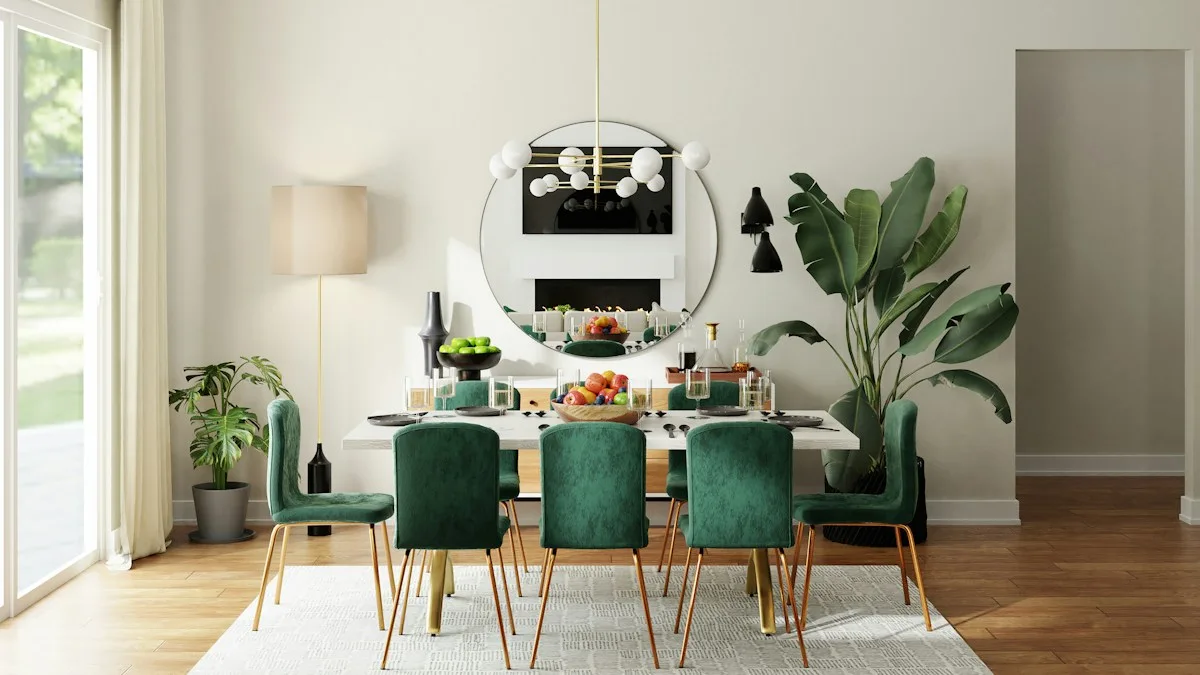
A mirror behind a table can turn a room photograph into a view of two overlapping scenes. The direct view shows the table arrangement, while the reflection may introduce a window, light fitting or another part of the room. Notice that second scene before choosing the final image. You can then decide whether it supports your subject or accidentally becomes a competing centre of attention.
Name the direct subject
Decide whether the photograph concerns the whole room, the table arrangement or the relationship between furniture and wall. This choice changes how much the mirror needs to contribute. A broad interior account may benefit from a reflection that gives context; a close table study may need a simpler relationship.
Use the room and its objects as appropriately available to you. Do not move a mounted mirror, alter a fixture or rearrange someone else’s belongings to make the photograph easier. A composition choice can begin with the viewpoint and the images you can legitimately make.
Read the reflection separately
Look at what appears inside the mirror as though it were another photograph. Identify the brightest area, the strongest shape and any subject that draws attention. Then return to the whole frame and notice where your eye goes first.
The reflection may repeat a curve or colour from the table and make the relationship more interesting. It may also introduce a bright rectangle that dominates everything else. Neither effect needs a universal rule; compare it with the subject you intended to show.
Compare an appropriate viewpoint
If the location allows, compare another ordinary viewpoint without creating an obstacle or changing the room’s fittings. Notice how the reflected scene changes while the table remains the same. A small visual difference can explain why two photographs of the same furniture feel quite different.
The ordinary cup still-life guide offers a related exercise in choosing relationships rather than collecting decorative props. Keep the comparison focused enough to see what the mirror adds instead of changing every element of the table arrangement at once.
Choose the account you want
If the mirror is part of the story, let its contribution be visible and intentional. If the table is the subject, choose the image in which its role remains clear. Review the whole final photograph for other people and personal information before sharing it, respecting the relevant permissions and privacy.
The dinner table guide considers the table’s actual use, which should remain more important than making a particular picture. A photograph can record a pleasing room without requiring a new arrangement for every reflection. The useful outcome is an image whose direct and reflected scenes make sense together, with the table still doing the job it was meant to do.
Have a correction or a question? Contact the journal. See how we choose topics and approach shopping advice.