Shopping note: This journal carries advertisements and may earn a commission from qualifying purchases through marked commercial links. Product availability, prices and returns depend on your retailer and region. Read our disclosure.
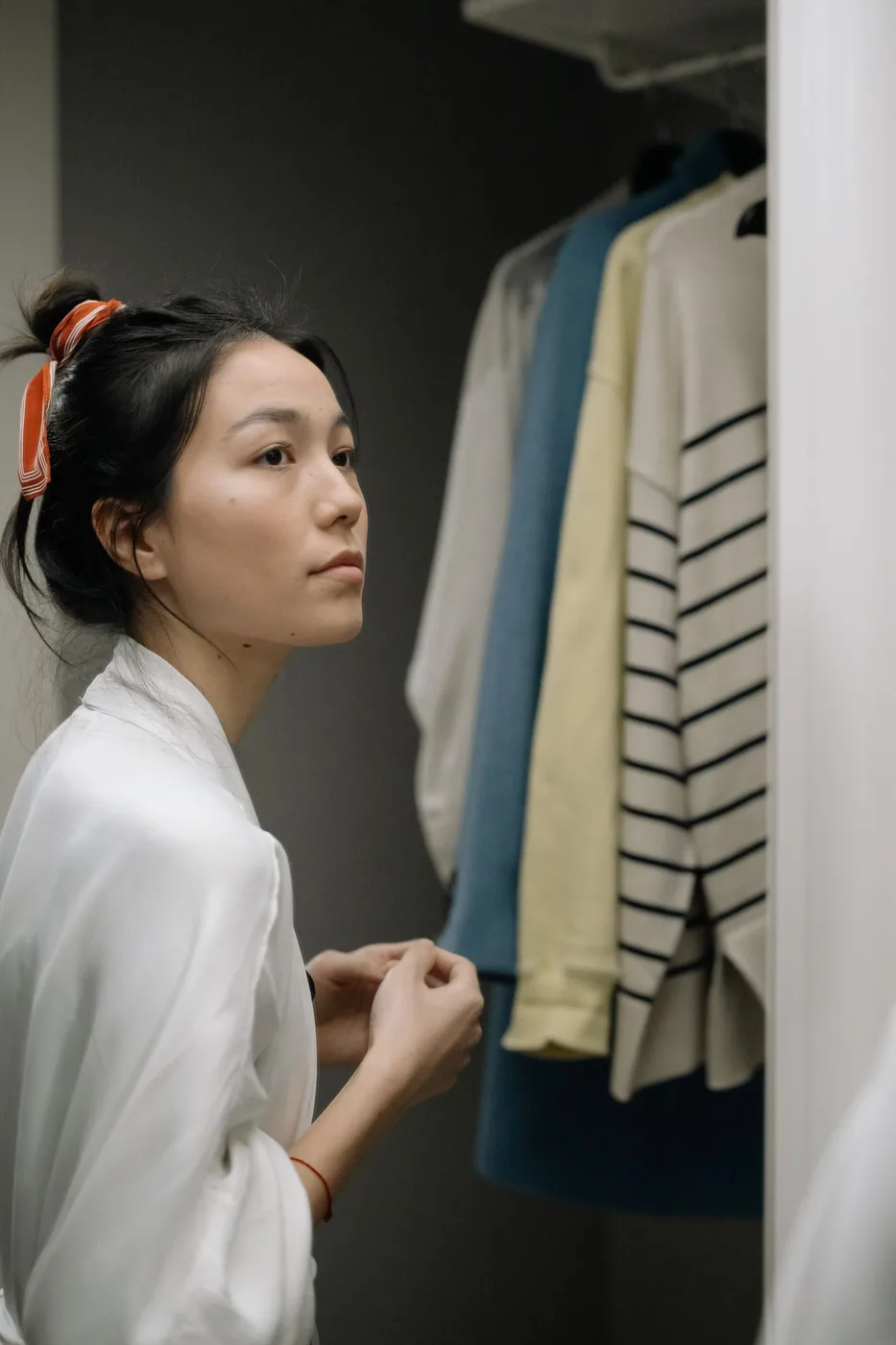
An inconvenient wardrobe can tempt you to reorganise every shelf when all you need is tomorrow's outfit. Separate those two tasks. Choosing one complete combination first gives the next morning a practical answer and reveals which storage problem actually interrupted the decision.
Start with tomorrow's activities
Write down the ordinary demands of the day: the journey, the main activity and any change in setting. Check the forecast where it affects clothing. You do not need an elaborate schedule; you need enough information to distinguish a walking day from one spent mostly seated indoors.
Choose a familiar starting garment that suits those demands. Add the remaining pieces, including footwear, underlayers and the bag. A top and trousers laid beside one another are not yet a complete outfit if the shoes or suitable outer layer are missing. Try the combination rather than assuming it works because the colours are compatible.
Resolve only the immediate obstacles
If an item is awaiting care, put it in the appropriate process and choose something ready. Do not place it back in the wardrobe as though finding it solved the problem. If a fastening or fit feels uncertain, check it now or use another garment. Tomorrow morning is unlikely to offer a better moment for that decision.
The clothing care routine helps distinguish storage from readiness. A beautifully grouped rail can still contain garments that cannot be worn. Make the selected outfit usable before deciding whether the rest of the wardrobe needs a new visual arrangement.
Give the outfit a temporary place
Use suitable hangers or folding for the actual garments. Choose a position that keeps the outfit accessible without blocking a door or crowding a walkway. Keep small accessories in an appropriate container rather than balancing them on a hanger where they can fall or snag fabric.
The hanger-shape guide is useful here, especially for knitwear or structured pieces. Do not create a permanent “tomorrow” pile that gradually collects alternatives. Keep one decided outfit with a limited backup only if the day's uncertainty genuinely requires it.
Record the storage problem separately
Once tomorrow is handled, note what made the choice difficult. Perhaps a shelf hides trousers, several items await repair, or the rail is too crowded to see sleeves. Name the specific issue and choose a separate time to address it. Moving every garment tonight may conceal the original problem beneath a larger unfinished task.
Does this mean never reorganising? A thoughtful change can help when its purpose is clear. Use the outfit decision as evidence: improve the place that repeatedly prevents retrieval or readiness. The immediate success is a complete wearable outfit, while the later storage work has a concrete question to answer rather than an entire wardrobe to make perfect.
Have a correction or a question? Contact the journal. See how we choose topics and approach shopping advice.