
Shopping note: This journal carries advertisements and may earn a commission from qualifying purchases through marked commercial links. Product availability, prices and returns depend on your retailer and region. Read our disclosure.
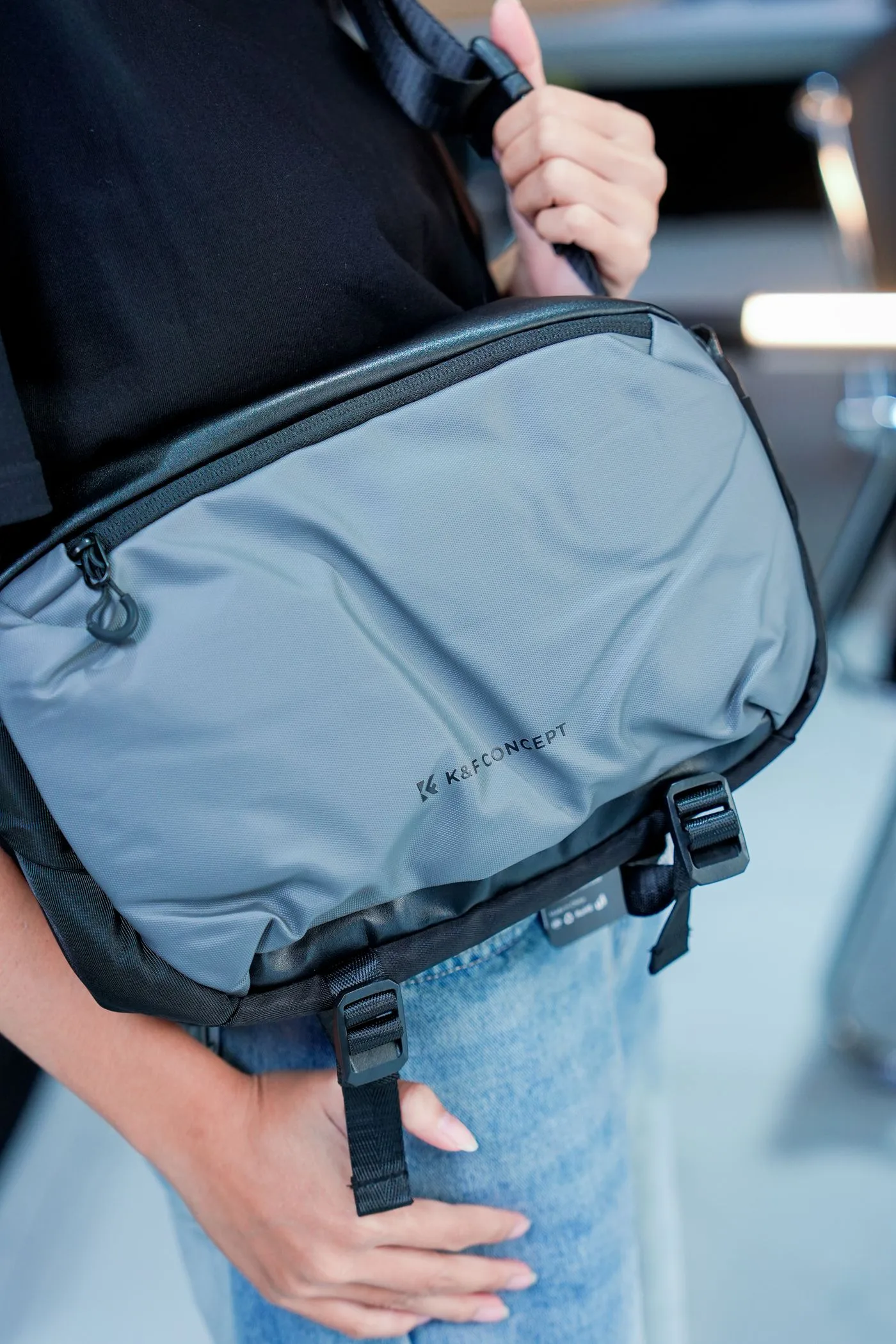
A bag’s front photograph may show a flap, several buckles and a zip without explaining the relationship between them. Read those details as questions about the actual construction rather than assuming you know how it opens. Products that look similar can have different arrangements. Before choosing a bag, establish how its maker describes the parts you would need to use, while keeping the photograph’s visual appeal in its proper role.
Describe the visible arrangement
Look at where the flap, straps and fastenings sit relative to one another. Record what is actually visible, not a mechanism inferred from another bag. A buckle may have a role you cannot establish from the image, and a decorative tab may not be a handle or permitted attachment point.
Use the actual product description to identify the parts. If the photograph and wording leave an important question unresolved, ask the seller about that particular feature. “Which closure provides access to the main compartment?” is more precise than asking whether the bag is easy to use.
Connect the question to a real task
Think about what you intend to retrieve and when. The question might concern the main compartment or a separate area whose presence has not yet been established. Do not assume a visible panel is a pocket simply because that arrangement would suit your plan.
Keep the task grounded in the things you actually carry. The everyday tote checklist can help you identify the existing contents before comparing bags. A clear list of belongings is more useful than inventing extra objects to justify a feature in a product image.
Use an authorised examination
If there is an appropriate opportunity to examine the actual bag, follow the seller’s handling instructions. Ask for help when the opening arrangement is unclear. Do not pull on unfamiliar components, force a fastening or perform an improvised test to discover what the product description did not explain.
Check the maker’s relevant requirements for the actual bag. A photograph of someone carrying it is not proof of a load capacity, a particular use or the suitability of an added accessory. Keep those claims within established information.
Separate appearance and operation
You may like the front view even if the access arrangement is not the one you intended. Write those as two separate conclusions rather than allowing one to cancel the other silently. A visually appealing bag can remain a poor match for your particular task without being a poor product in general.
The wallet and bag size guide considers a related fit question. Once the actual construction and contents are understood, decide whether the complete arrangement serves your use. The best result of reading the front photograph is not a confident guess; it is a focused comparison built from the real product’s information.
Have a correction or a question? Contact the journal. See how we choose topics and approach shopping advice.