Shopping note: This journal carries advertisements and may earn a commission from qualifying purchases through marked commercial links. Product availability, prices and returns depend on your retailer and region. Read our disclosure.
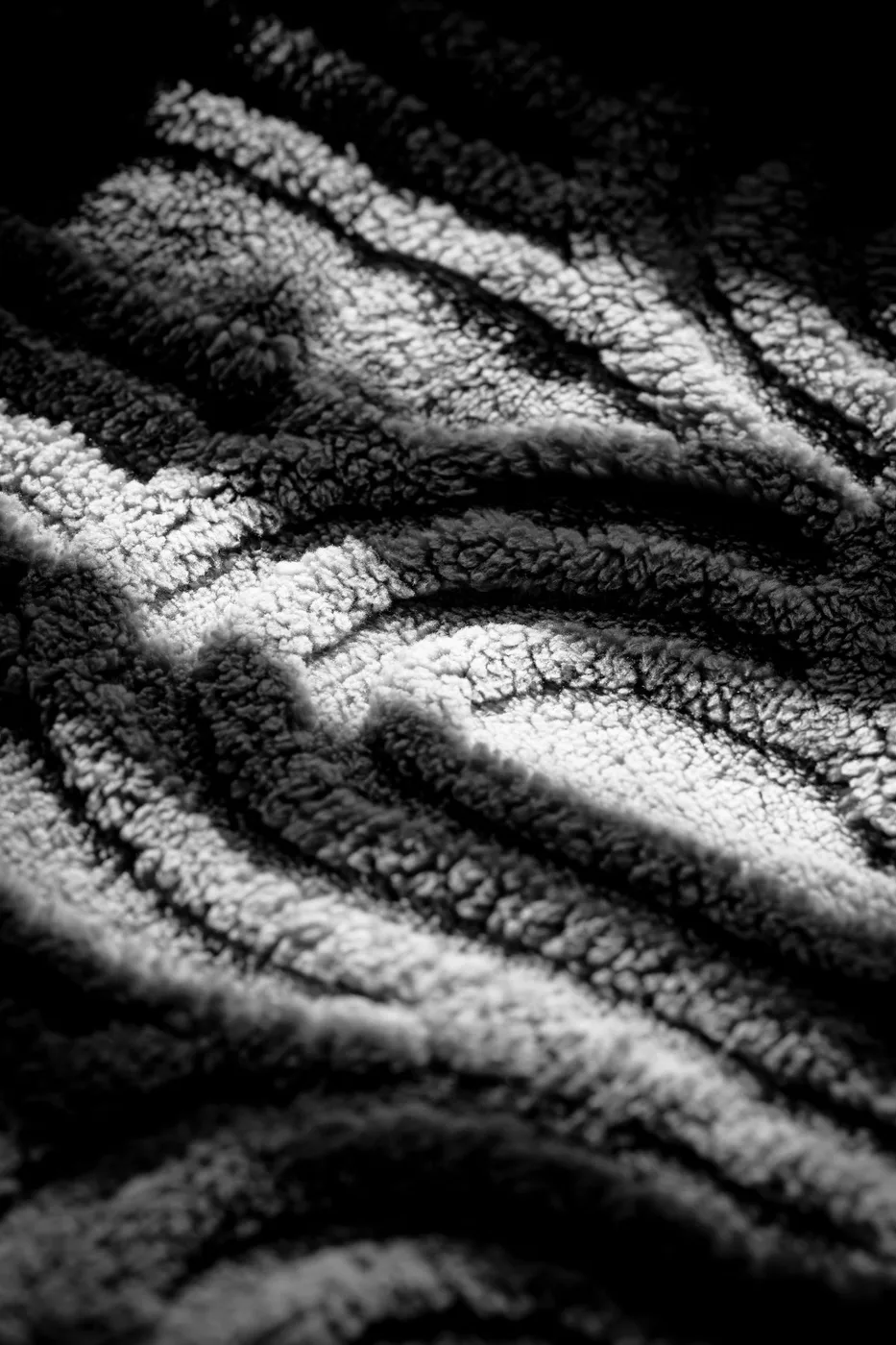
A close photograph of fabric can make its surface look dramatic while revealing little about its composition or suitability for a particular garment. Use texture as an observation and a buying question, not as proof of a material claim. Describe what you can see, then consult the actual product information for what the object is. This keeps a useful visual impression from becoming an unsupported story about quality or comfort.
Describe the surface plainly
Start with visible characteristics such as a pronounced raised surface, a small repeated pattern or a contrast between smoother and more textured areas. Ordinary language is enough. You do not need to attach a technical textile term unless you know that it applies to the actual product.
A black and white close-up can make light and shadow especially prominent. It may show the surface clearly while withholding the colour relationship that matters to your outfit. Treat that image as one view rather than a complete description of the garment.
Keep composition separate
Read the stated composition and care information for the specific product. A soft-looking photograph does not establish the fibres, and a visibly dense surface does not prove a particular performance claim. Do not borrow the composition of a similar-looking garment to fill a missing product detail.
If the relevant information is absent or unclear, ask the seller through the appropriate channel. Name the point you need to establish. A specific composition question is easier to answer than a general request to confirm that the fabric is “good.”
Compare the whole garment
Look beyond the close-up to the actual garment’s form, seams and relationship with the other clothes you intend to wear. The texture that attracted you may occupy the entire piece or only one panel. Decide whether that scale supports the outfit rather than imagining a small attractive sample enlarged into an ideal garment.
The knitwear buying guide provides a broader framework when the product is knitwear. Keep texture alongside the other established information rather than allowing an appealing surface to replace it.
Use an appropriate comparison
If you can examine the item through an authorised opportunity, follow the seller’s handling instructions. Compare it with your intended use without stretching, rubbing or otherwise performing improvised tests on stock. A texture question does not justify changing an item that is not yours.
Keep a short buying note distinguishing what you observed, what the product information establishes and what remains unresolved. The dress care buying check illustrates another question that belongs before purchase. A vivid surface can be part of why you choose an item, but the final decision should concern the actual product you would own and care for, not only the close photograph that first drew your attention.
Have a correction or a question? Contact the journal. See how we choose topics and approach shopping advice.